At Henlex, we have been protecting welders and their coworkers from welding fumes for over 40 years. Fumes are formed when a metal is heated above its boiling point, and its vapors condense into very fine particles. Their size ranges from 0.005 to 20 µm, but most are...
Although many factors must be considered to know how much welding fume could be dangerous for a specific person, there are clear guidelines and legislation to protect welders. In addition, more studies about the dangers of welding fume come out every year and help...
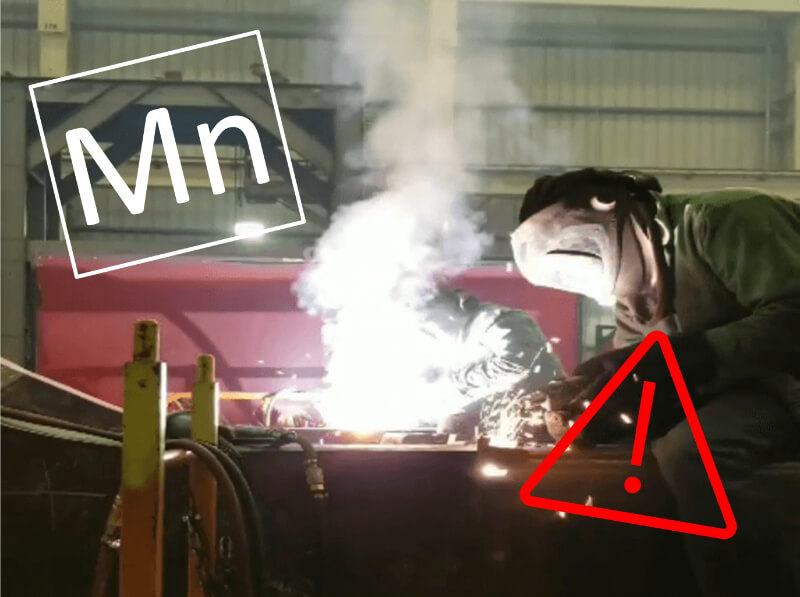
Manganese is an essential mineral for the body but can also be toxic. The liver and kidneys excrete dietary manganese excess. Inhaled Manganese bypasses this defense mechanism, and breathing welding fumes with Manganese can lead to an accumulation that could cause...
The risks associated with welding are well known, and solutions to make this job as safe as possible are easily accessible. But what about employees working next to them? Anyone working in a building where some welding is done should be concerned. Employees working...
Welding fumes are notoriously harmful to our health, and working in a poorly ventilated area or confined space will increase the exposure and risk. Generally, if there is still some smoke in your working environment a few minutes after welders are done, it lacks...
The welding process produces smoke that contains harmful metal fume and gas by-products. Fumes are formed when a metal is heated above its boiling point, and its vapors condense into very fine particles. If you feel any symptoms while or after inhaling welding fumes,...