
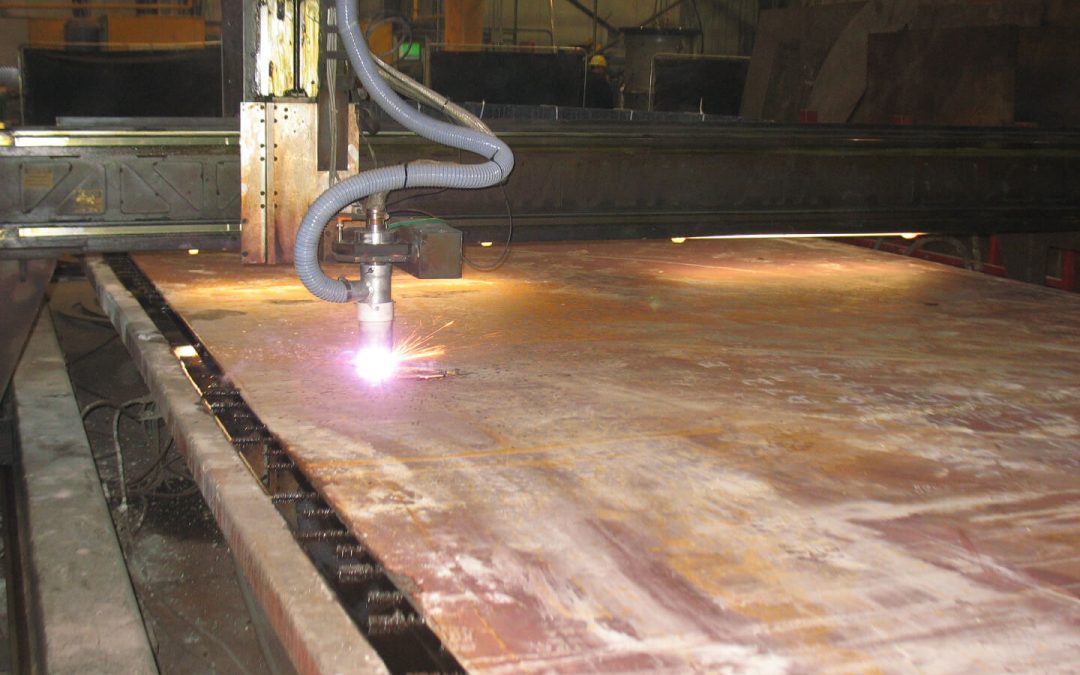
Plasma cutting is fast, precise, and widely used in metal fabrication—but it also generates a large volume of hazardous fumes and fine particulate matter. These fumes contain metal oxides, ultrafine particles, and gases that pose serious health risks and can quickly put a shop out of compliance with occupational safety regulations.
Choosing the right plasma cutting fume extraction solution depends heavily on how plasma cutting is performed: on a CNC plasma table or manually. In this article, we break down the most effective fume extraction methods for each scenario.
Why Plasma Cutting Fume Extraction Is Critical
Plasma cutting produces significantly more fumes than many welding processes. The high temperatures involved vaporize metal, coatings, and contaminants, creating:
- Ultrafine airborne particles that remain suspended for hours
- Heavy metal fumes (zinc, chromium, manganese, aluminum, etc.)
- Gases that irritate the respiratory system
- Dust accumulation that damages equipment and electronics
Without proper source capture, these contaminants spread throughout the shop, exposing operators and nearby workers—even those not involved in cutting.
Plasma Cutting Fume Extraction for a Plasma Table
CNC plasma tables offer the best opportunities for high-efficiency source capture, because the cutting process is fixed and predictable.
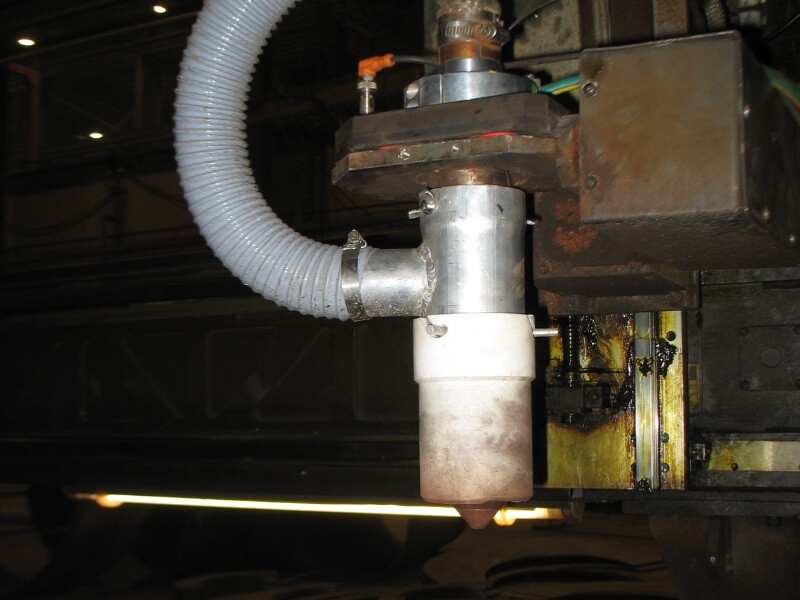
Fume Extraction Nozzle (Source Capture at the Torch)
This is one of the most efficient and cost-effective plasma table fume extraction solutions available.
Because the fumes are captured directly at the point of generation, only a small airflow is required—often just about one hundred CFM—to achieve excellent results.
Key advantages
- Extremely efficient at capturing fumes before they spread
- Low purchase cost compared to large extraction systems
- Very low operating cost due to minimal airflow requirements
Important consideration
- Plasma tables often use water beds. Over time, small amounts of water will be extracted with the fumes.
- A water separation drum must be installed upstream of the extraction unit to protect filters and prevent corrosion.
When properly designed, this solution delivers outstanding performance with minimal energy consumption.
Henlex uses Teflon to manufacture its nozzles to ensure high durability, given the harsh conditions they are subjected to. See it in action there.
Plasma Table Hood
A hood installed over or around the cutting area is another effective option, especially when torch-mounted capture is not possible.
Key advantages
- Very efficient when properly sized and positioned
- Suitable for a wide range of table sizes and applications
Limitations
- Requires much higher airflow due to the size of the hood
- Higher capital and operating costs
- Can complicate loading and unloading of metal plates
- Requires careful design to avoid fugitive emissions
Hoods can work very well, but they must be engineered correctly. Undersized systems often fail to capture fumes effectively despite high energy consumption.

Manual Plasma Cutting Fume Extraction
Manual plasma cutting presents a much greater challenge. The torch moves freely, and fumes and particles are projected in every direction.
Downdraft Table (Best Option for Manual Plasma Cutting)
Whenever possible, manual plasma cutting should be done on a downdraft table.
A downdraft table pulls air downward through the work surface, capturing fumes, dust, and sparks at the source while keeping them away from the operator’s breathing zone.
Key advantages
- Ideal for fixed workstations
- Very effective when airflow and capture velocity are properly designed
- Helps contain sparks and molten projections
- Improves overall shop cleanliness
Downdraft tables are one of the few solutions that work reliably for manual plasma cutting when the operation is stationary.
Manual Plasma Cutting in Mobile or Open Areas (Very Limited Options)
For manual plasma cutting performed on large structures, installed parts, or in mobile operations, effective fume extraction options are unfortunately very limited.
Because plasma cutting projects fumes and particles in all directions, solutions like flexible extraction arms or extraction nozzles may appear effective but, in reality, they capture only a small fraction of the total emissions.
These methods can help marginally but should not be considered comprehensive fume control solutions. In such cases, additional protective measures—such as respiratory protection and procedural controls—are often required.
Choosing the Right Plasma Cutting Fume Extraction System
In summary, CNC plasma tables offer the best opportunity for high-efficiency source capture. Torch-mounted extraction nozzles provide exceptional performance at low cost. Hoods are effective but more expensive.
Downdraft tables are the gold standard for manual plasma cutting at fixed stations. Mobile manual plasma cutting remains the most difficult scenario to control.
Plasma cutting fume extraction is not a one-size-fits-all problem. Systems must be designed around the process, not the other way around. Proper source capture dramatically reduces exposure, improves air quality, lowers operating costs, and helps facilities meet health and safety requirements.
If plasma cutting is part of your operation—manual or automated—investing in the right fume extraction strategy is essential for both worker health and long-term productivity.
3 Ways to Take a First Step Towards a Fume-Free Environment
1 – Attend Our Webinar

2 – Request our Compact Guide “30 Expert Tips for Eliminating Fume”
You will also receive information about regulations, success stories, tips to choose the right fume extractor.
This site is protected by reCAPTCHA and the Google Privacy Policy and Terms of Service apply.
3 – Contact Us
We would be pleased to help you protect your welders and comply with current standards. We travel everywhere in Canada and the United States for free demos.
1-800-922-2522
info@henlex.com
Or use our chat system at the bottom right corner get an answer to your questions now.